publications
publications in reversed chronological order.
Filter:
2027
- WACV
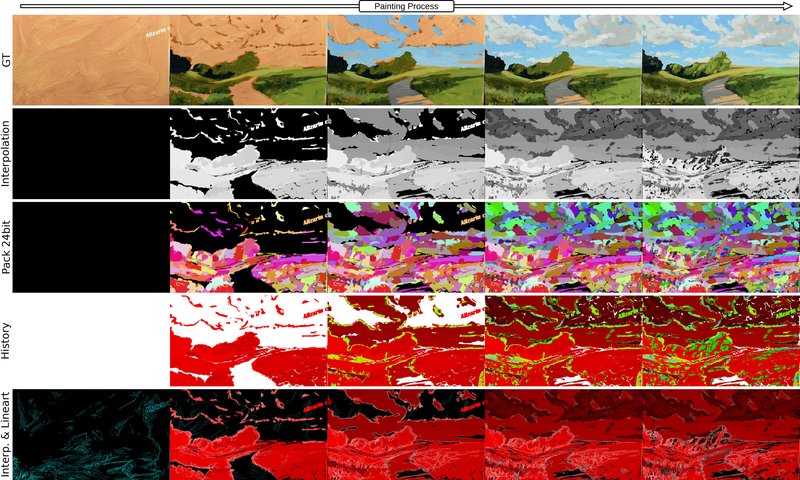 Painting Change Map as Guidance for Generating Painting ProcessesIn Proceedings of the IEEE/CVF Winter Conference on Applications of Computer Vision, 2027
- Introduces the Painting Change Map, a spatio-temporal control signal that encodes where and when an artist acts across a 1,000-step continuum.
- Enables fine-grained guidance of video generation for both forward painting and reverse “unpainting”.
- Outperforms existing control baselines and is competitive with or better than state-of-the-art painting-process methods.
2026
- TPAMI
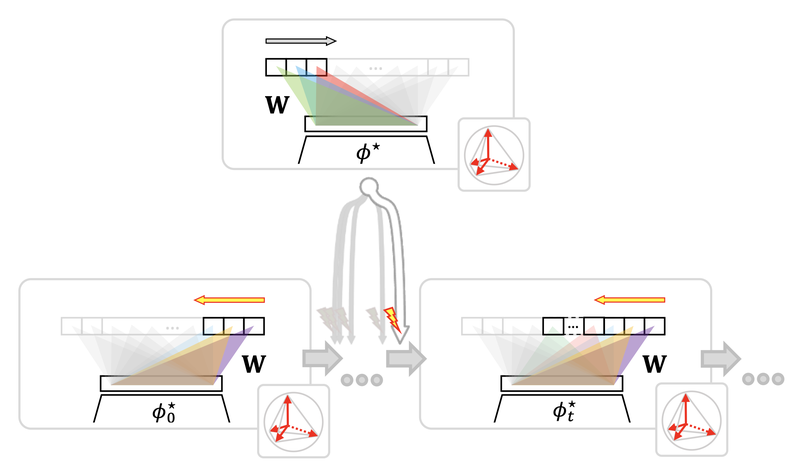 A Stationary (and Therefore Compatible) Representation is All You NeedIEEE Transactions on Pattern Analysis and Machine Intelligence, 2026Early access
- Proves that stationary representations learned with d-Simplex fixed classifiers imply compatibility under its formal definition.
- Shows that combining cross-entropy with a contrastive loss captures higher-order dependencies and is equivalent to learning under the compatibility constraints.
- Enables uninterrupted retrieval (no gallery re-indexing) while pre-trained models are fine-tuned and replaced, reaching state of the art.
- NeurIPS
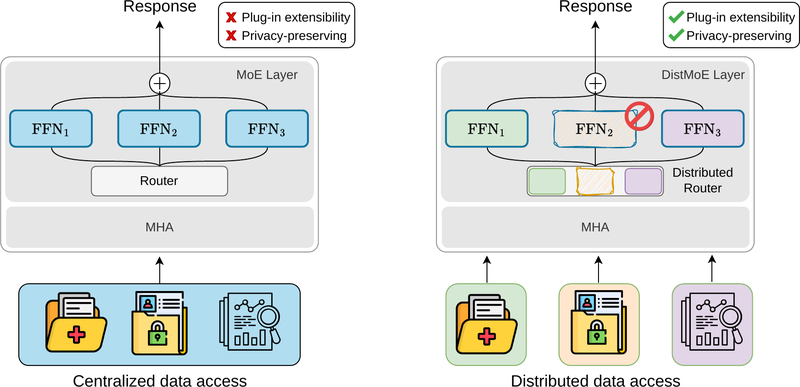 DISTMOE: Rehearsal-free Routing in Mixture-of-Experts for Distributed Instruction TuningIn Advances in Neural Information Processing Systems, 2026
- Proposes DistMoE, a mixture-of-experts approach for distributed visual instruction tuning of MLLMs on private, domain-specific client data.
- A public-anchored composition stage (routers + lightweight adapters, isotropic regularization) merges client experts without cross-client rehearsal.
- At inference, token-wise routing over public and private experts composes domains without explicit domain labels.
- NeurIPS
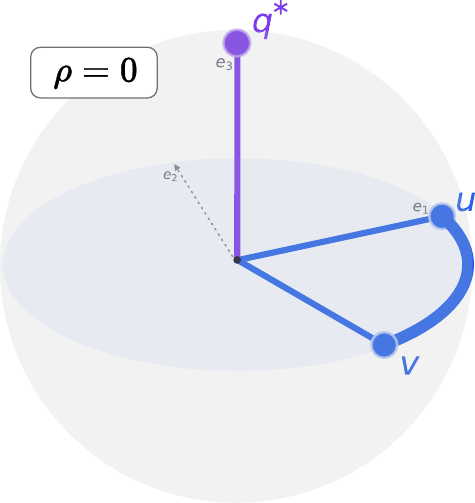 Spherical Interpolation for Backward-Compatible Multimodal RepresentationsIn Advances in Neural Information Processing Systems, 2026
- Tackles backward compatibility for vision-language models (CLIP/SigLIP) so a model upgrade does not require re-indexing the gallery.
- Shows that spherical interpolation (SLERP) between the old query and the orthogonally aligned new query can land closer to the retrieval-optimal direction, with a margin-based Recall@K certification.
- Recovers backward compatibility in most evaluated settings, improving over orthogonal alignment alone.
- NeurIPS
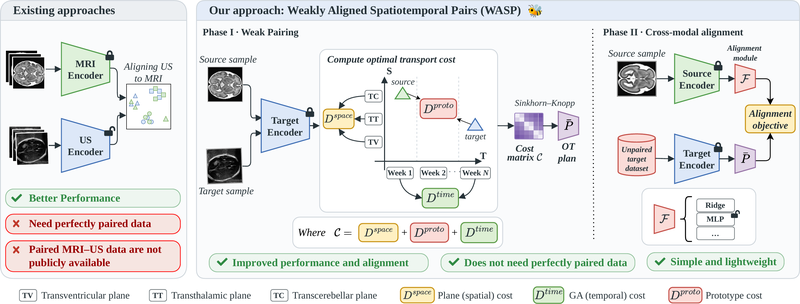 WASP: Weakly Aligned Spatiotemporal Pairs for Fetal Brain MRI-Ultrasound LearningIn Advances in Neural Information Processing Systems, 2026
- Teaches an ultrasound-only foundation model to understand fetal brain MRI, without subject-paired MRI–US scans.
- Builds weak cross-modal pairs via entropic Optimal Transport on clinical metadata (gestational age and diagnostic planes) and fits a lightweight alignment module, with the backbone frozen.
- On USFM, cuts gestational-age error from 21.9 → 17.4 days and raises plane classification from 61.9% → 69.0%.
- ECCV WSVideo Representation and Temporal Modeling for Shoplifting Detection in Retail EnvironmentsIn European Conference on Computer Vision Workshops (RetailVision7), 2026
- IH&MMSecImproving Generalization in AI-Generated Facial Image Detection via Explainable RecoveryIn Proceedings of the ACM Workshop on Information Hiding and Multimedia Security, 2026
- CVPR
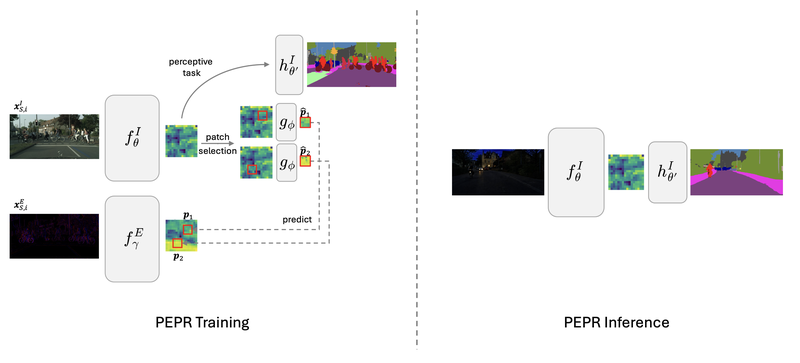 PEPR: Privileged Event-based Predictive Regularization for Domain GeneralizationIn Proceedings of the IEEE/CVF Conference on Computer Vision and Pattern Recognition, 2026Findings
- Uses event cameras as privileged information, available only at training time, to make a standalone RGB model robust to domain shift.
- {“Reframes learning using privileged information as latent prediction”=>”the RGB encoder predicts event features instead of being forced to align with them, so it keeps its semantic detail.”}
- Improves day-to-night and other domain shifts on both object detection and semantic segmentation.
- AAAI
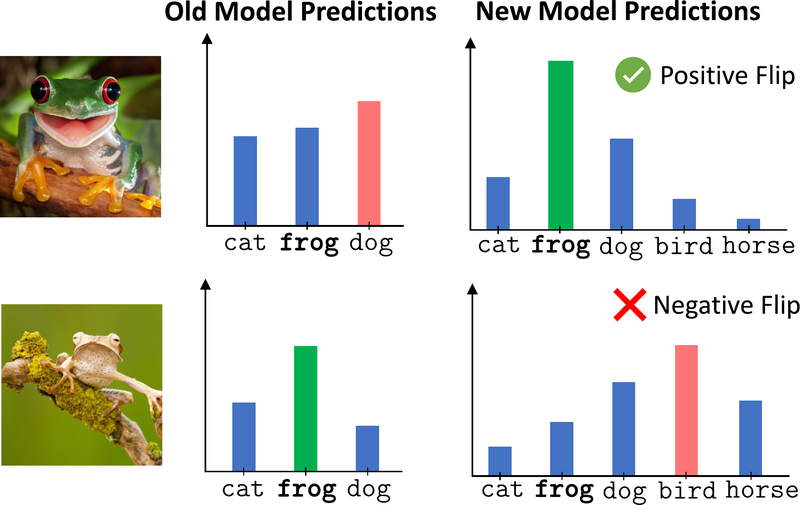 Mitigating Negative Flips via Margin Preserving TrainingIn Proceedings of the AAAI Conference on Artificial Intelligence, 2026
- {“Targets negative flips”=>”samples that the old model classified correctly and the updated model gets wrong after new classes are added.”}
- Preserves the old model’s margins with an explicit logit margin-calibration term.
- Adds a double-source focal distillation (old model + independently trained new model) so new classes stay accurate, reducing negative flips while keeping high overall accuracy.
- Smart Agri
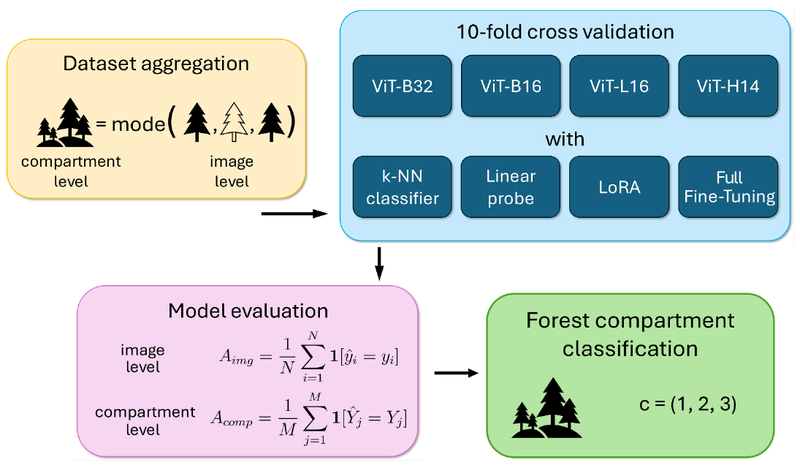 Parameter-efficient Vision Transformer adaptation for stem quality classification from smartphone forest imagesSmart Agricultural Technology, 2026
- Classifies the stem quality of standing trees (Douglas fir) from ordinary smartphone forest images, enabling quality-aware digital forest inventories.
- Benchmarks ViT backbones with k-NN, linear probing, full fine-tuning and LoRA; LoRA works best despite limited, imbalanced data.
- Reaches ~0.78 accuracy at the forest-compartment level by majority voting over image-level predictions.
2025
- NeurIPS
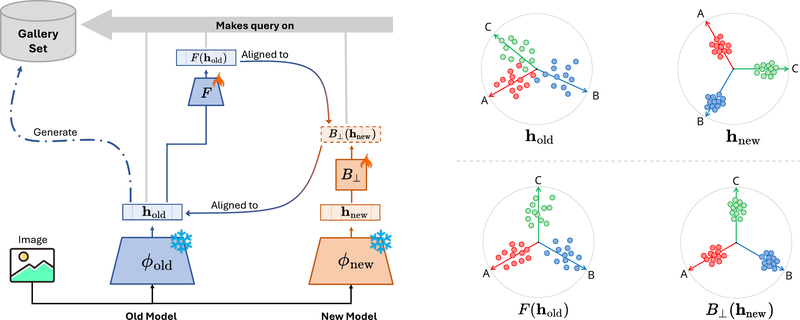 λ-Orthogonality Regularization for Compatible Representation LearningIn Advances in Neural Information Processing Systems, 2025
- Introduces λ-Orthogonality, a relaxed orthogonality constraint on an affine adapter that maps new-model features into the old-model space.
- Gets the adaptability of affine maps while preserving the geometry (and zero-shot ability) of the newly learned representation.
- Validated across architectures and datasets for compatible retrieval-system updates.
- ACM MM
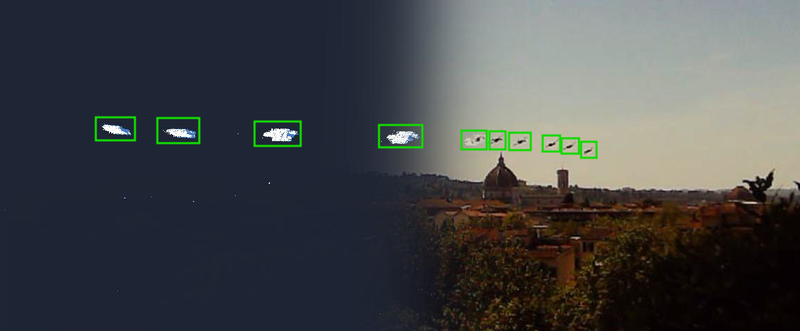 FRED: The Florence RGB-Event Drone DatasetIn Proceedings of the ACM International Conference on Multimedia, 2025
- Releases FRED, a synchronized RGB + event camera dataset for drone detection, tracking and trajectory forecasting.
- Includes 7+ hours of densely annotated trajectories from 5 drone models, including rain and adverse lighting.
- Provides standard evaluation protocols and metrics for reproducible benchmarking.
2024
- CVPR
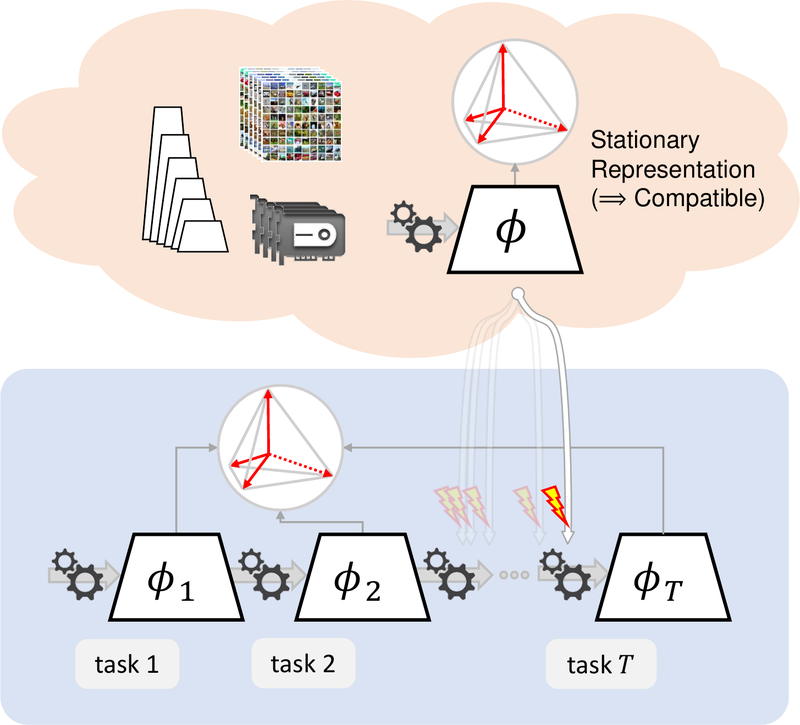 Stationary Representations: Optimally Approximating Compatibility and Implications for Improved Model ReplacementsIn Proceedings of the IEEE/CVF Conference on Computer Vision and Pattern Recognition, 2024
- Shows that stationary representations from a d-Simplex fixed classifier optimally approximate compatibility under both inequality constraints of its formal definition.
- Studies the practical case of a model that is sequentially fine-tuned and asynchronously replaced by a better pre-trained model downloaded from elsewhere.
- Delivers seamless retrieval service with improved accuracy and no gallery reprocessing. CVPR Highlight (top 2.8%).
- ECCV WS
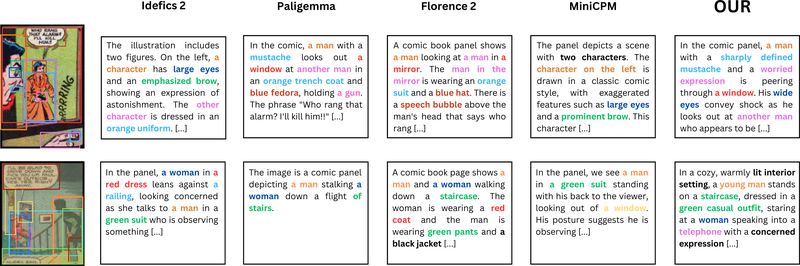 ComiCap: A VLMs Pipeline for Dense Captioning of Comic PanelsIn European Conference on Computer Vision Workshops (AI4VA), 2024
- Builds a training-free VLM pipeline for dense, grounded captioning of comic panels.
- Introduces an attribute-retaining metric and a densely annotated test set to select the best open-source VLM.
- Annotates 2M+ panels from 13,000 books, outperforming specifically trained models.
- ECCV WS
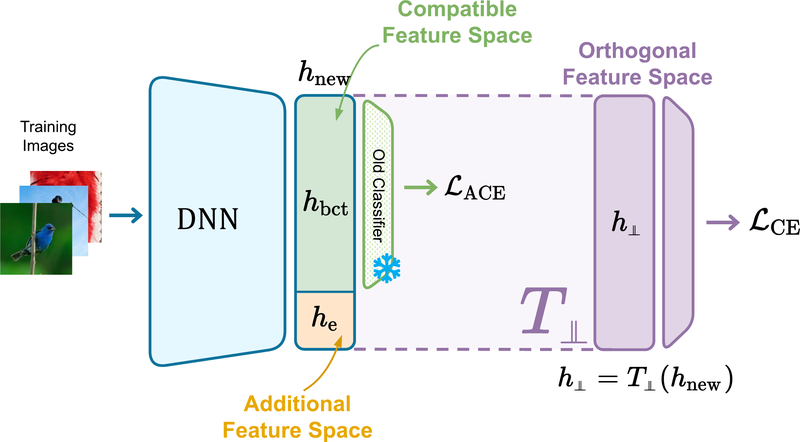 Backward-Compatible Aligned Representations via an Orthogonal Transformation LayerIn European Conference on Computer Vision Workshops (Beyond Euclidean), 2024
- Expands the representation with extra dimensions and learns an orthogonal transformation to stay compatible with the old model.
- The orthogonal map preserves the old feature geometry while new dimensions absorb new knowledge, so no re-indexing is needed.
- State-of-the-art compatibility and accuracy on CIFAR-100 and ImageNet-1k.
- ICDAR
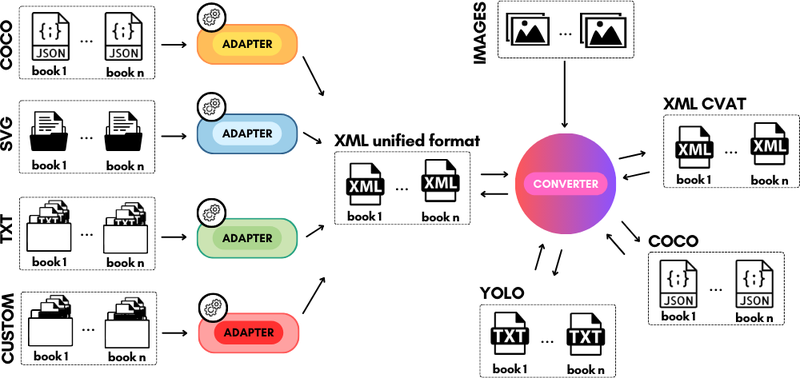 Comics Datasets Framework: Mix of Comics Datasets for Detection BenchmarkingIn International Conference on Document Analysis and Recognition, 2024
- Unifies existing comics datasets into one annotation format with consistent splits and metrics.
- Introduces Comics100, 100 books from the Digital Comics Museum, to counter the over-representation of manga.
- Benchmarks several detection architectures, releasing code and weights for reproducible comparisons.
- TMLRHyperspherical Simplex Representations from Softmax Outputs and Logits are Inherently Backward-CompatibleTransactions on Machine Learning Research, 2024Under review
2023
- TPAMI
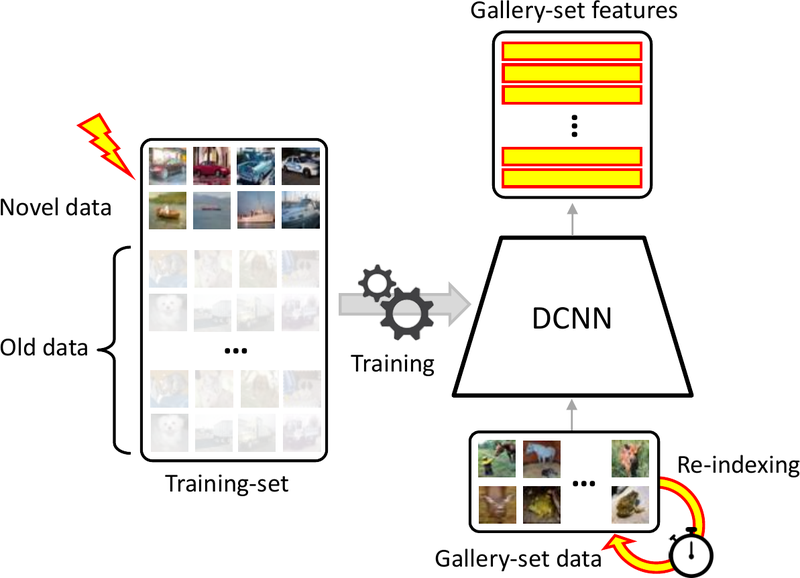 CoReS: Compatible Representations via StationarityIEEE Transactions on Pattern Analysis and Machine Intelligence, 2023
- Proposes CoReS, which learns compatible representations by relying on stationarity induced by polytope-based fixed classifiers.
- Needs no mapping between old and new features and no pairwise training with the previous model.
- Largely outperforms prior work, especially across multiple consecutive model upgrades.
2022
- ICIAP
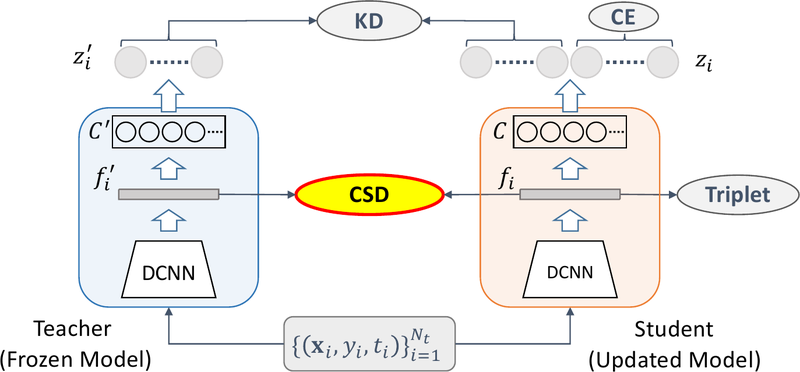 Contrastive Supervised Distillation for Continual Representation LearningIn International Conference on Image Analysis and Processing, 2022
- {“Proposes Contrastive Supervised Distillation (CSD)”=>”the student is contrastively distilled from the teacher using label information, reducing feature forgetting.”}
- Shows that feature forgetting in visual retrieval is less catastrophic than in classification.
- Best Student Paper Award at ICIAP 2021.
- ACM ToMM
 CL^2R: Compatible Lifelong Learning RepresentationsACM Transactions on Multimedia Computing, Communications, and Applications, 2022
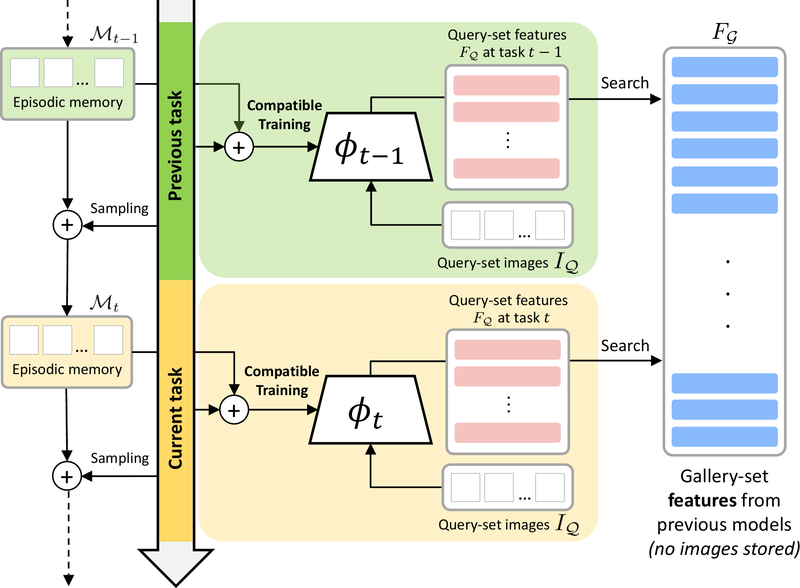
- {“Formalizes Compatible Lifelong Learning Representations (CL²R)”=>”updating the model must never make gallery features unusable for visual search.”}
- Identifies stationarity as the key property and enforces both local and global stationarity during training.
- Introduces new metrics for evaluating compatibility under catastrophic forgetting.